Acceptance First, Then Two Paths
Post 5 of 7 in a series on teachers and AI. Post 1 gives the whole answer in brief.
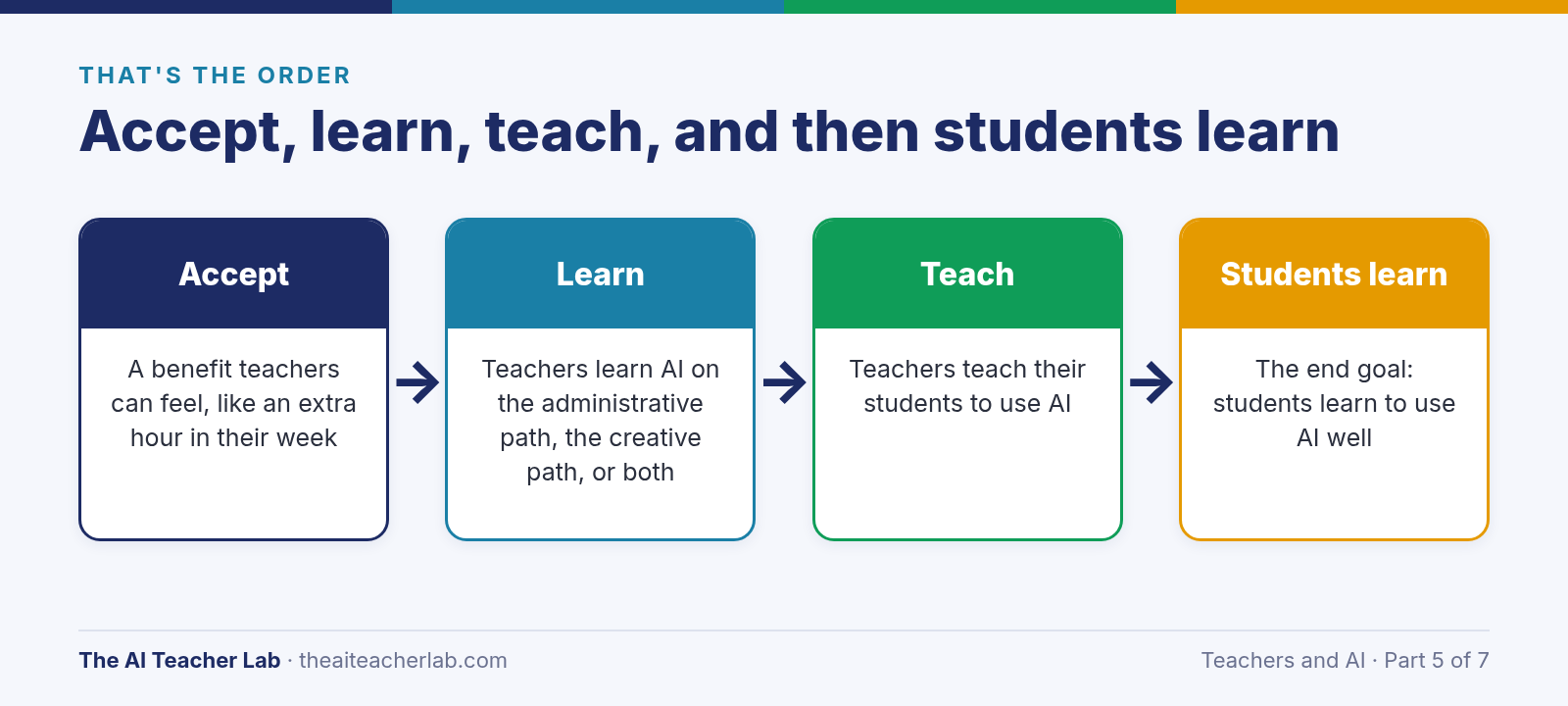
If we want students to learn AI, teachers have to learn it first. But before teachers will learn it, they have to accept it. That's the order: accept, learn, teach, and then students learn.
Acceptance comes from a benefit you can feel
Some teachers flatly refuse to accept that the world is changing. Lectures about the future of work won't move them. What does move people is a benefit they can feel.
The fastest way to win acceptance is to save a teacher time on something they hate. A parent email that takes twenty minutes to word carefully. A rubric. A permission letter. When AI turns an hour of paperwork into ten minutes, that teacher's attitude starts to change. They're not convinced by an argument; they're convinced by an extra hour in their week.
After acceptance, the learning splits
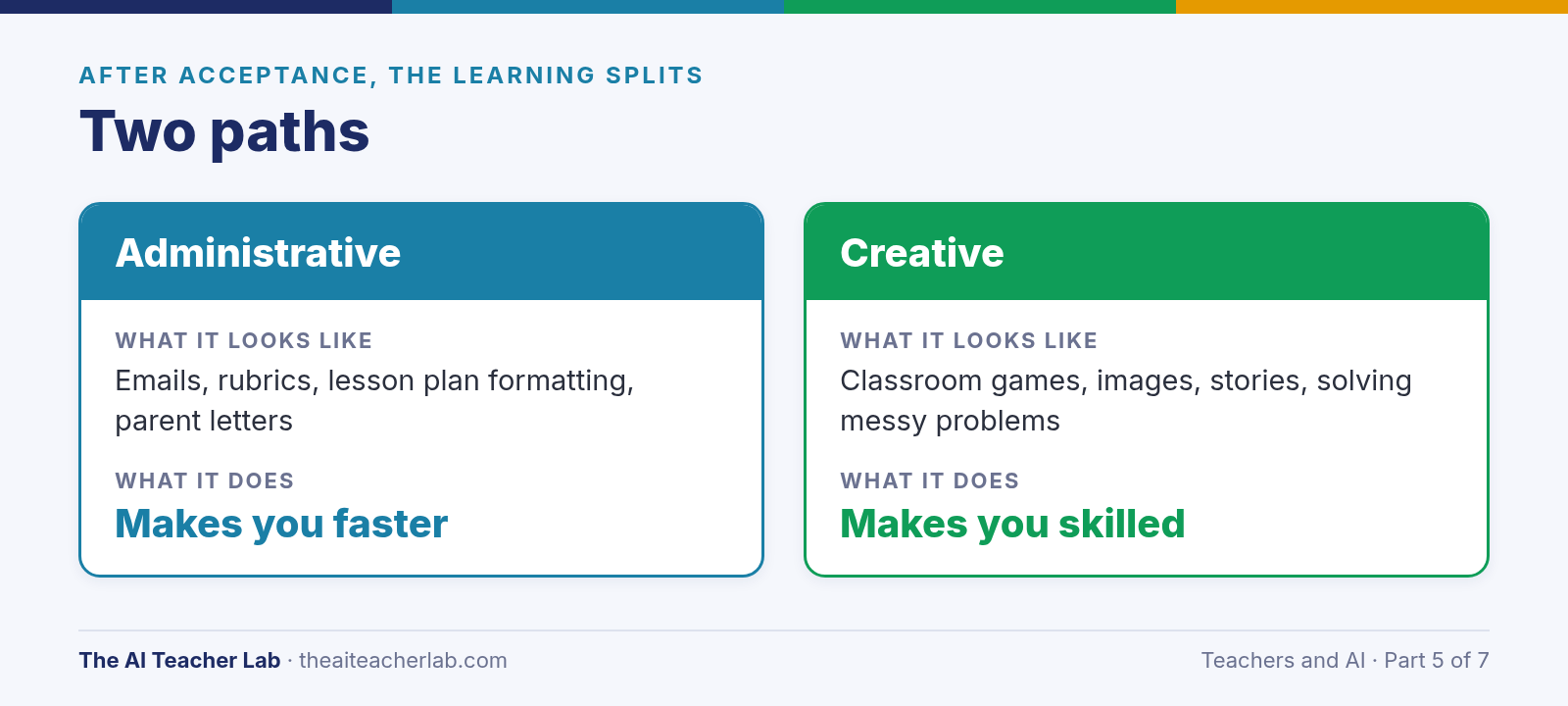
Once a teacher accepts AI, the learning goes down two separate paths.
| Path | What it looks like | What it does |
|---|---|---|
| Administrative | Emails, rubrics, lesson plan formatting, parent letters | It makes the teacher faster. |
| Creative | Classroom games, images, stories, solving messy problems | It makes the teacher skilled. |
Administrative use makes you faster. Creative use makes you skilled.
Why the creative path matters more for students
Most training focuses on the administrative path, and that's not wrong. Saving time matters, and it's the hook that wins acceptance. But the administrative path mostly stops with the teacher. Using AI to format a rubric doesn't give a teacher much to pass on to students.
The creative path is different. When a teacher builds something with AI, they have to experiment, fail, adjust their thinking, and go back and forth until it works. That struggle is where real skill comes from. It's also the kind of skill students need, and it's the path that leads cleanly to teaching them.
Let teachers loose
I don't think training teachers on a list of specific skills is the best route. It's not wrong, and I don't claim to know exactly what's right. But it doesn't fit how people actually learn a tool like this.
Teachers need to be let loose, the way we eventually learned every other technology. They need to explore AI, play with it, and build things they actually care about.
Learning to swim
Think about learning to swim. You don't learn by watching a slideshow about swimming. You get in the water. You struggle. You learn to doggy paddle first, and then you build up to other strokes. And the people who learn fastest usually have a swim coach in the water with them.
AI is the same. Teachers need to jump in, struggle a little, and have someone beside them who knows how to swim.
This series is an example
This whole series started with exactly that kind of creative use. I sat down with AI and had a real conversation about a problem I've struggled with for years. I brought a messy question, pushed back on its answers, ranted, and asked it to argue with me at the end. We worked through it together until we landed on a plan.
That is the kind of AI use most teachers have never experienced. It's not a worksheet generator. It's a thinking partner. And once a teacher has done it once, they understand AI in a way no PD slideshow can teach.
In the next post, I'll lay out who the swim coaches should be and how to train them.
Want to help your teachers save time with AI? Book a PD session for your school.
New ideas every week: Follow The AI Teacher Lab on Facebook.
Want to help your teachers save time with AI? Book a PD session for your school.
New ideas every week: Follow The AI Teacher Lab on Facebook.

